







 Zurück zur Übersicht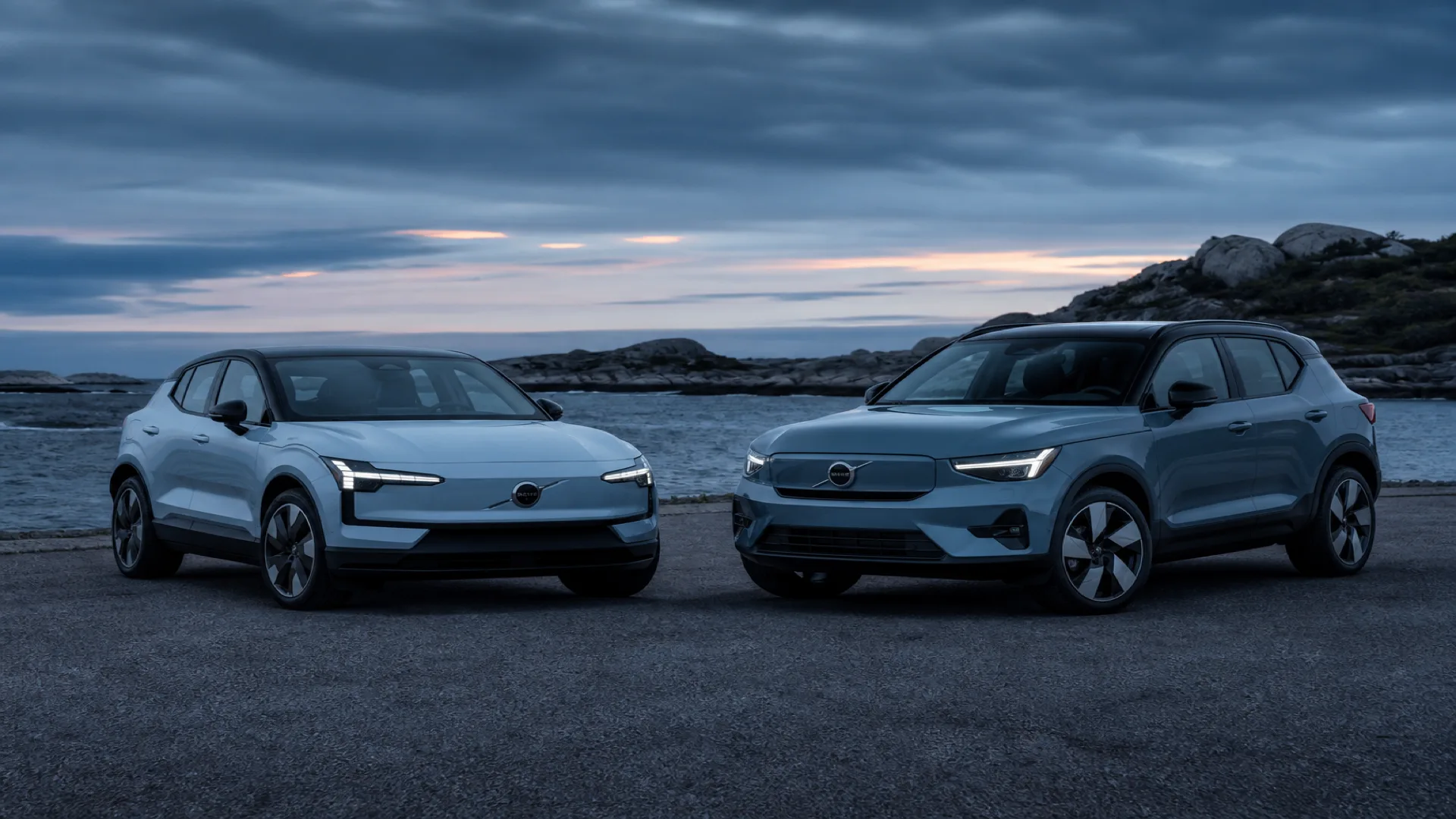
Veröffentlicht am 20. Apr. 2026 von Philipp Hellmayr — 4 Min. Lesezeit
Volvo EX30 vs. XC40 Recharge: Schlägt die neue Plattform den bewährten Bestseller?
Wichtigste Erkenntnisse
Die Analyse von über 2.000 Fahrten zeigt, dass der neue Volvo EX30 im Alltag deutlich effizienter ist und fast 50 % weniger Energie verbraucht als der schwerere XC40 Recharge. Bei Autobahngeschwindigkeiten über 100 km/h gleicht der Luftwiderstand das Feld jedoch aus, wodurch der Effizienzunterschied zwischen den beiden Modellen auf nur noch 2,3 % schrumpft.
Volvo EX30 vs XC40
Wer heute ein Volvo-Autohaus betritt und ein kompaktes Elektro-SUV sucht, steht vor einer faszinierenden Entscheidung. Kauft man den bewährten, kantigen und äußerst erfolgreichen XC40 Recharge? Oder entscheidet man sich für den brandneuen EX30 – ein etwas kleineres, deutlich günstigeres Modell auf einer modernen, reinen EV-Plattform? Um das belastbar zu beantworten, haben wir anonymisierte Realfahrdaten aus der Aximote App ausgewertet.
Auf dem Papier sehen die WLTP-Effizienzwerte beider Autos bemerkenswert ähnlich aus (rund 17,4 bis 18,5 kWh/100 km). Doch das Datenblatt erzählt nicht die ganze Geschichte. Der XC40 basiert auf der CMA-Architektur – einer Plattform, die ursprünglich für Verbrennungsmotoren entwickelt wurde. Der EX30 hingegen nutzt Geelys SEA2-Plattform, die von Grund auf ausschließlich für Elektrofahrzeuge konzipiert wurde [1].
Führt eine dedizierte EV-Plattform tatsächlich zu besserer Effizienz im Alltag? Wir haben die Daten ausgewertet.
Datengrundlage
Diese Analyse basiert auf 2.078 realen Fahrten von Aximote-Nutzern bei milden und sommerlichen Bedingungen (um den Einfluss der Winterheizung auszuschließen). Da Aximote native CAN-Bus-Telemetrie direkt über das Android Automotive OS (AAOS) ausliest, repräsentieren diese Werte den tatsächlichen Energieverbrauch aus der Batterie, kategorisiert nach Fahrgeschwindigkeit.
- Volvo EX30: 1.052 Fahrten (49 Fahrzeuge, 51.024 km)
- Volvo XC40 Recharge: 1.026 Fahrten (44 Fahrzeuge, 38.874 km)
Die Daten zeigen eine massive, unerwartete Lücke im Alltagsbetrieb: Der Volvo XC40 Recharge verbraucht im gemischten Stadtverkehr fast 50 % mehr Energie als der EX30.
Doch in einer überraschenden Wendung verschwindet dieser enorme Effizienzunterschied auf der Autobahn bei Geschwindigkeiten über 100 km/h fast vollständig.
| Fahrszenario | Volvo EX30 | Volvo XC40 Recharge | Unterschied |
|---|---|---|---|
| Alltagsbetrieb (gemischt) | 19,1 kWh/100 km | 28,4 kWh/100 km | XC40 verbraucht 48,7 % mehr |
| Autobahn (>100 km/h) | 21,9 kWh/100 km | 22,4 kWh/100 km | XC40 verbraucht 2,3 % mehr |
| WLTP-Normwert (Durchschnitt) | ~17,4 kWh/100 km | ~18,5 kWh/100 km | |
| Realverbrauch vs. WLTP | +10,0 % | +53,7 % |
Die Alltags-Überraschung
Im gemischten Alltagsbetrieb ist der EX30 ein Musterbeispiel für Effizienz. Mit 19,1 kWh/100 km liegt er nur 10 % über seinem offiziellen WLTP-Wert – ein außergewöhnlich ehrliches Ergebnis für ein Alltagsfahrzeug.
Der XC40 Recharge hingegen kommt unter denselben milden Bedingungen auf erschreckende 28,4 kWh/100 km. Das sind fast 54 % mehr als der offizielle WLTP-Wert. Warum? Die Antwort liegt in der Plattform und dem Gewicht. Der XC40 Recharge wiegt über 2.000 kg (bis zu 2.188 kg in der Twin-Motor-Version) [2]. Hinzu kommt, dass er eine gemeinsame ICE/EV-Plattform (CMA) nutzt, die im Niedriggeschwindigkeitsbereich wahrscheinlich höhere Verluste und eine weniger optimierte Antriebssteuerung aufweist als die zweckgebundene SEA2-Architektur des EX30. Im Stop-and-go-Verkehr fordert das zusätzliche Gewicht seinen Tribut.
Die Autobahn-Annäherung
Filtert man die Daten nach Fahrten mit einer Durchschnittsgeschwindigkeit über 100 km/h, dreht sich das Bild vollständig.
Der Verbrauch des EX30 steigt auf 21,9 kWh/100 km – eine normale, erwartbare Strafe dafür, ein Fahrzeug mit hoher Geschwindigkeit durch die Luft zu bewegen. Der Verbrauch des XC40 sinkt jedoch tatsächlich auf 22,4 kWh/100 km.
Bei Autobahngeschwindigkeiten dominiert der Luftwiderstand und überlagert den Nachteil des höheren Gewichts des XC40. Obwohl der EX30 einen etwas besseren Luftwiderstandsbeiwert hat (0,28) [3], findet der Antrieb des XC40 bei konstanten Reisegeschwindigkeiten seinen optimalen Betriebspunkt – befreit von der Physik, eine 2-Tonnen-Masse an jeder Ampel neu beschleunigen zu müssen. Auf einer langen Reise sind beide Autos in puncto Effizienz praktisch gleichauf.
Was das für Geldbeutel und Reichweite bedeutet
Bei heimischem Laden (angenommener EU-Durchschnittspreis von 0,30 €/kWh) kostet der EX30 im Alltag rund 5,74 € pro 100 km. Der XC40 kostet 8,53 € pro 100 km. Auf 15.000 km im Jahr spart der EX30 allein bei den Stromkosten über 400 €.
Bei der Reichweite (nutzbare Kapazität: ~57 kWh beim EX30, ~67 kWh beim XC40):
- In der Stadt: Der EX30 fährt trotz kleinerer Batterie weiter (~298 km) als der XC40 (~236 km).
- Auf der Autobahn: Hier zahlt sich die größere Batterie des XC40 endlich aus – rund 299 km Reichweite gegenüber 260 km beim EX30.
Versuchst du, dich zwischen zwei Elektroautos zu entscheiden, oder fragst du dich, ob dein aktuelles Auto unterdurchschnittlich abschneidet? Da Aximote die Daten direkt aus dem nativen Android Automotive OS deines Fahrzeugs ausliest, erfasst die App den tatsächlichen Batterieverschleiß, exakte Ladekurven und präzise Effizienzwerte – ganz ohne Bluetooth-Dongle oder ungenauem Handy-GPS.
Zwei Fahrzeuge live vergleichen
Willst du sehen, wie dein Auto im Vergleich abschneidet? Wir haben gerade das Aximote Fahrzeugvergleichs-Tool gestartet, mit dem du zwei Fahrzeuge anhand echter Community-Daten direkt miteinander vergleichen kannst.
Volvo EX30 vs. Volvo XC40 vergleichen
Quellen
[1] DriveDuel. "Volvo XC40 vs Volvo EX30 comparison - differences, prices & technical data."
[2] Zecar. "Volvo XC40 Recharge Twin (2022 - 2026 ) EV Specifications."
[3] EVspecs. "Volvo EX30 Single Motor - tech specs and prices."
Geschrieben von


Analysiere deine Fahrten in Echtzeit
Verstehe deinen Fahrstil, optimiere deinen Verbrauch und senke deine Kosten. Lade Aximote jetzt kostenlos herunter.